Showing posts with label religion. Show all posts

Sunday, July 24, 2022

Athletes Are not Heroes


One of the impressive aspects of the St Louis Cardinals baseball organization is their farm system, meaning the organization they have in place to select, train and prepare their young players for the Major Leagues. As a result, the Cardinals are never a bad team; they are not like the Marlins or Cubs, who have sold all their good players once they win a championship. Being consistently above average maintains fan interest in the team: St Louis has been second or third in attendance in the National League in most years, which is pretty good for a small-town market.

 The Cardinals’ two stars, however, are actually on the team as the result of trades. First baseman Paul Goldschmidt was traded from the Arizona Diamondback in 2019, and 3rd baseman Nolan Arenado came from the Denver Rockies in 2021. They were both named to the All-Star game last week, and are having phenomenal seasons. Goldschmidt is batting .333, and Arenado .299. Both are outstanding defensive players, with Arenado making unbelievable off-balance throws all the way to first base.

Equally important to me, both are humble and team players. When Goldschmidt had streaks of 25 games with a hit and 46 games on base, he repeatedly told journalists that he did not care about these personal accolades and that all that mattered was that the team won the game. Both seem to be team players.

So it is with great sadness and disappointment that I read today (also here) that both Goldschmidt and Arenado will not be traveling with the team to play against Toronto because they have not been vaccinated. Canada requires all people who enter the country to show proof of vaccination. They will forfeit their pay over those two games, but given their importance in producing runs for the team (a desperate need for the team), they will sorely be missed.

But what disappoints me is not that the Cardinals will more likely lose the games, but what it says about the players. The Cardinals did not give an explanation for Goldschmidt’s vaccine refusal, but apparently he’s an evangelical Christian, so perhaps he’s influenced by that community’s vaccine skepticism (though Tommy Edman is also an evangelical, and is vaccinated). In Arenado’s case, the team president, John Mozoliak said Arenado “was hoping to begin a family with his wife and for him it was a personal decision, and we honor that.”  Of course, there is no evidence that getting vaccinated against Covid has any effect on fertility or a baby.

I believe in being civil and polite, so try to respect other people’s opinions. But I always struggle with how to react to opinions that are illogical and/or unscientific. I do realize that today’s scientific consensus may turn out to be wrong, so we cannot be doctrinaire about science. But how are we supposed to react to people who thumb their noses at not only at science, but also at the rest of society, because by not being vaccinated, they undermine “herd immunity.” They are making their bodies available for the Covid virus to spread and mutate (hence Canada’s immigration rules). At what point do we start condemning people for their irrational and anti-social beliefs?

They will both be penalized financially. “Arenado will forfeit $384,615 of his $35 million annual salary for the two missed games, while Goldschmidt will lose $285,714 of a contract that pays him $26 million in2022.”  I respect people who stick to their beliefs despite financial costs. But in this case, given that there is no evidence to support their skepticism (but plenty of political misinformation and pseudoscience), how do we balance respect for other people’s beliefs with an insistence that the truth matters, and that social responsibility is important?

My respect for the two of them has plummeted. This is a reminder of why athletes are poor role models: they are lauded for performance in a sport, and that has little or no bearing on other aspects of life. They may be famous, but they are not heroes. They may even be knuckleheads.

Monday, July 12, 2021

St Louis' 4th of July Parade and Civil Religion

Corvettes on parade

On Saturday July 3rd, we went to the St Louis "America's Birthday Parade." Parades are common across cultures, and often they are a way for a community to emphasize and build up its identity. Americans have been celebrating Independence Day with parades since shortly after the Revolutionary War. But nowadays, parades do not attract the same crowds as in the past. This year's parade certainly was affected by Covid-19, though no one there was wearing a mask, even though there were plenty of children too young to be vaccinated. I suppose the people who are cautious enough to wear a mask did not attend. The St Patrick's Day parade in March had been cancelled because of Covid, so the Irish community brought their giant inflatable leprechaun out for Independence Day. 

Sparse crowd on Market Street
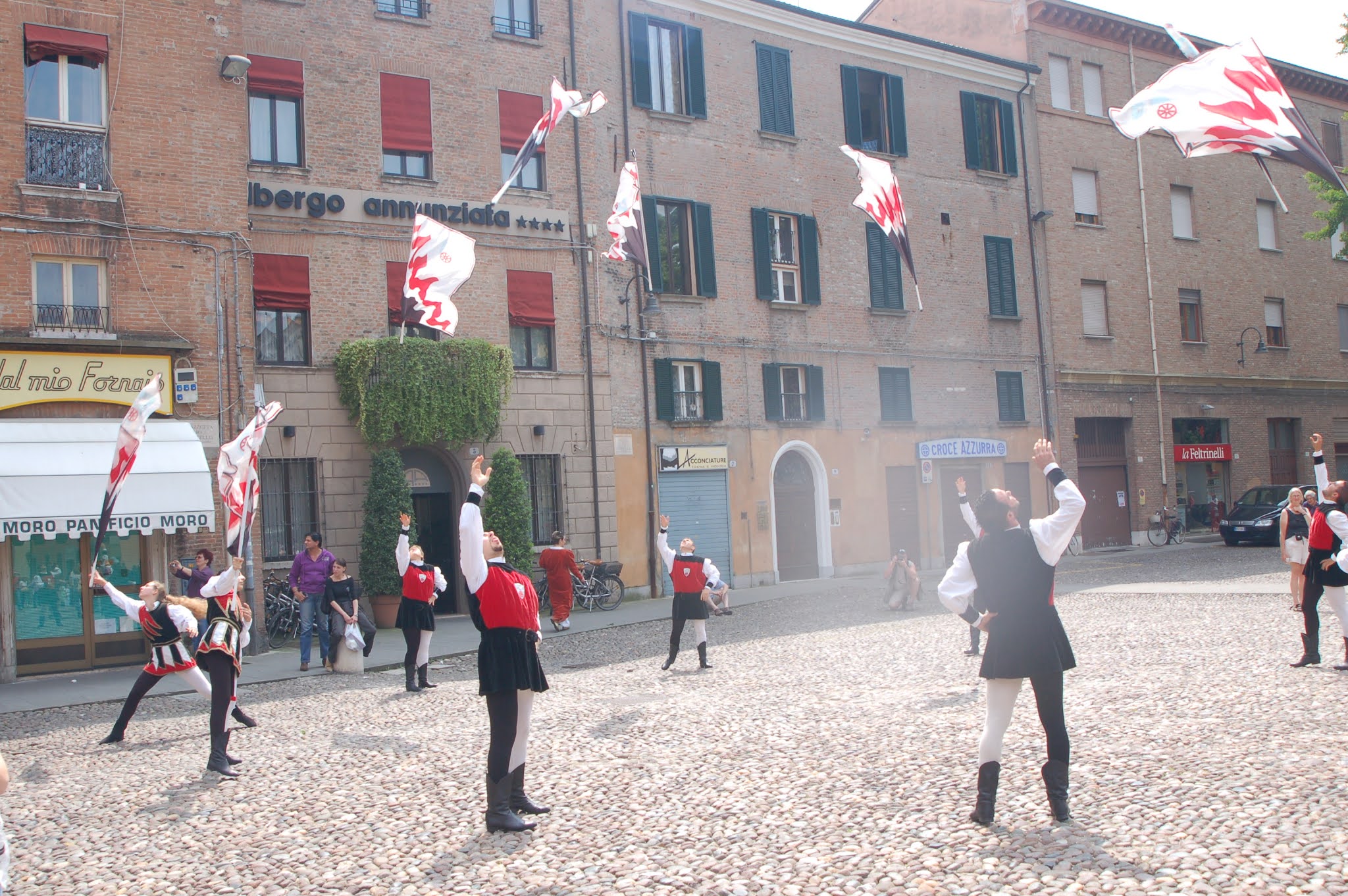
I was struck by how similar parades are cross-culturally. Each "troupe," be it a band or a float or a balloon, was preceded by a banner that named the group in the procession. A decade ago, I saw a neo-Medieval procession to a palio-like horse race in Ferrara, where they also had banners and bands leading each team. Like religious processions in Hong Kong and Taiwan, St Louis had a variety of bands and music, as well as floats, and displays of dancing and athleticism. No shamans in trance in St Louis, but there were athletic young girls doing flips going down the street, and very energetic dancers. 
St Patrick's Day Parade Committee banner


Banner in front of band, Ferrara 2010

Banners and fa pau in Shau Ki Wan, Hong Kong


These flag handlers reminded me of the flag acrobats in Italy, though in Italy they throw the flags in the air and catch them (usually) on the way down.
Flag handlers, Ferrara 2010

Music and bands are nearly universal in parades. Here the marching bands were mostly high school bands.

Some of the bands are on floats.
Paddlewheel boat float

Amusing "ambulance"
Float from local Chevy dealership
And this being America, there are many cars.

Patriotic Chargers
One of the more interesting parades in the anthropological literature is a parade that used to be held by the Tang lineage in the New Territories of Hong Kong. The Tangs were the big landowners of the Yuen Long area. They paraded along the boundaries of their territory. Their purpose, from a political point of view, was to show other lineages, and their tenants in outlying villages, how powerful and numerous they were.  I did some brief research in a village that was located next to a small Gun Yam (觀音) temple that belonged to the Tang, a place they would visit annually on their parade. (This is described in a book chapter by James L. Watson entitled "Fighting with operas: processionals, politics, and the spectre of violence in rural Hong Kong.") These parades are a bit like the way dogs mark their territory. And they are also reminiscent of the Unionists' parades celebrating victories over Irish Catholics in Northern Ireland.

Interestingly, the Independence Day Parade in St Louis has a somewhat similar political origin. The current parade began as part of a "Veiled Prophet" parade. The Veiled Prophet Organization was a club for the elite men of St Louis. It was founded in 1878, a year after white and Black workers held a major strike that shook the city. Once the strike was broken, the elite sought to heal the wounds, but on their terms. The Veiled Prophet Organization held a debutante ball and a parade, which essentially expressed who was in charge of the city. People have protested against the Veiled Prophet for years, claiming it was elitist, racist, and sexist (see 1969 article on protests in the St Louis Post Dispatch and a 2014 article in The Atlantic). Just last month, Ellie Kemper (an actress from Missouri) was criticized for having participated in the debutante ball when she was 19 (she was crowned "Queen of Love and Beauty") and she apologized. (Vanity Fair had a good analysis here.) The Veiled Prophet Organization has adapted and changed over the years, and the Veiled Prophet Parade that used to be held at the time of the Ball in October has become a "Fair St Louis" parade over July 4th. 

In general, I find that most people who did not grow up in St Louis are shocked at the Veiled Prophet as a cultural institution, but those who grew up here or have lived here a long time take it as normal, simply part of the culture. There is so much that could be said about the Veiled Prophet. Maybe some other day. Right now I want to focus on the "America's Birthday Parade" and on the custom of parades in general (realizing that by doing so, I'm whitewashing the role of the Veiled Prophet in St Louis).

I had never noticed that people hand out candies to children along the parade route, but I saw this in St Louis and then found a picture of the same practice in my files of Hong Kong's Shau Kei Wan parade for Tam Kung.

Of course, these similarities between religious and secular processions are not mere coincidences, but are evidence for the theory that nationalism is the "civil religion" of the United States. This is the theory that rituals like Thanksgiving Day, 4th of July parades and fireworks, and the singing of the national anthem and reciting of the Pledge of Allegiance are ways Americans create a common understanding of who they are. These secular rituals are necessary because no one religion unifies the country. 

And, furthermore, the similarities also suggest that what we label "religion" is really not a separate domain at all, but is simply one form of symbolic thinking and ritual behavior that all humans engage in. This is a growing argument in the anthropology of religion and in religious studies, which sees the Western definition of religion as culture-bound. Indeed, Chinese did not have a word for "religion" until about 1900, when the neologism zongjiao 宗教 was introduced. Of course, Chinese had all sorts of rituals and ideas (e.g. ancestor worship and the emperor's offerings at the Temple of Heaven) that Westerners called "religious" (actually, they called them "superstitions," but that is another problem), but only in the West, where Papal authority was separate from the "secular" authority of emperors and kings, did a notion of religion develop.

This is a big topic I hope to write about in the future. In the meantime, it helps me understand my local parade as a ritual of integration, and historically as a display of power.