Showing posts with label risk. Show all posts

Sunday, April 26, 2020

Covid-19 Uncertainty: Be willing to say “We don’t know”


Like many people, I find myself distracted by the virus, as if infected by a different virus that makes me into a zombie that has to read the news. I find myself unable to stop reading about models and what the exit strategy will be for the “stay at home” orders in the US and elsewhere. Policies in Sweden, Taiwan, Korea, and elsewhere are all fascinating. I know many others are infected, too; friends tell me, and journalists write about it.

At the root of the problem is uncertainty, which is something I’m thinking a lot about in my research on pesticides, too. Though we now know a lot more about the Covid-19 virus (and doctors are better able to treat patients), there are many things we still don’t know. Most importantly, we don’t know what the world will look like after the pandemic passes, and when that will be.

Some people are able to just live with the knowledge that we don’t know. A friend wrote to a small group of us proposing a trip sometime next fall, and when I wrote back “I think it is going to be more than a year before we can travel freely, don't you?,” another friend wrote curtly, “Guessing game at this point.” Since he is a surgeon, I was about to write back, “Well, you must have some model in mind.” But then I realized he was right; it is pointless to speculate, and I just have to accept the uncertainty.

And there is a lot of uncertainty. While China, Taiwan and Korea have done a great job containing the virus, how long can they maintain their containment policies, including closed borders? Paradoxically, the chaos in the US and much of Europe, including the lack of preparation, slow reaction and lack of testing, may lead the US to develop a herd immunity that allows the US to come out of the epidemic earlier than areas that contained it better.

We don’t know whether a vaccine is possible; after all, we don’t have a vaccine for other coronaviruses. So it is possible that the only exit strategy for the virus is to keep the epidemic at a low level, so that it does not overwhelm the hospitals, until the population develops enough immunity that the virus does not spread very easily. This, essentially, is the Swedish path, where people are encouraged to keep social distance but there has been no stay at home order.

As doctors learn how to treat patients better, the death rate is declining, and may soon be lower than the death rate for the annual flu. But at this point, we don’t know, because we don’t really know how many asymptomatic cases there are, so we do not know the total number of cases, which is the denominator for the death rate (death rate = # dead/# infected). So while we currently think the US is a mess, and that Southern governors opening up their economy now seem irresponsible, the US and Sweden may turn out to be the better way to get out of this pandemic. We don't really know.

Some people are obsessed with knowing whether they have had the virus. A friend of mine told me of a group of co-workers who decided to get antibody tests (which are starting to be available here for $200-$260 (see one example here). The test checks your blood for antibodies to tell you whether you have had a Covid-19 infection and developed the antibodies. I asked why they wanted this test; they said they “just want to know.”

This is very odd, because though they think they will be liberated after a positive test (meaning they have antibodies for Covid-19), actually, their behavior should not change whether it is positive or negative. If they are negative, they still have to wear a mask and stay home. If they are positive, they assume that if they have Covid-19 antibodies, that they cannot be re-infected. They are probably right, but we don’t know this for sure. One study found low levels of antibodies in recovered patients, suggesting they may have only weak or no immunity. There have been a few anecdotal cases of apparent “re-infection,” and while it is more likely that their original infection just lingered (i.e. that when they were supposedly recovered and virus free, that they still had the infection), we can’t be sure. So to be cautious, they should still practice social distancing. Furthermore, it is not like they can suddenly go to the movies or to restaurants: they are all still closed, and few of their friends can go anyway.

In addition, there are serious doubts about the reliability of these serological tests. There are now only four tests approved by the US Food and Drug Administration (FDA), but 107 that are merely self-validated andpossibly fraudulent or unreliable. Those are the tests that are easily available, of course.

Even with a “reliable” test there is a problem, because most tests are only 95% reliable, meaning that they make a mistake 5% of the time. If I test positive, it is more likely that it is a false positive. In Missouri, it is very unlikely that any one person has had a case of Covid-19. When rates of infection for California came back at between 1.5 and 2.4 percent, experts thought these figures were much too high. Though a recent study suggests NewYork City may already have a 14 percent infection rate, experts are skeptical. Certainly, in the St Louis metropolitan area, where we have 2,720 cases as of yesterday, (0.1% of our area population, and 127 deaths), the chances of anyone being infected is very small.

The main problem with testing, however, is that it is interesting and important for epidemiological understanding of the epidemic, but is not very useful for the individual. Specifically, if a population’s infection rate is low, say 2%, then a test that is 95% accurate is not very helpful. If I test positive, I have roughly the same chance of being truly positive and of being a false-positive. Ninety-five percent accurate sounds good, but it is not if you are testing for something that is very rare. (To think with another example, since Yellow Fever is extremely rare in the US and few have antibodies for it, if I take a test that turns out positive for Yellow Fever antibodies, it is a lot more likely that the test is wrong than that I had or was exposed to Yellow Fever.)

Testing is key for public health purposes. We need tests to see who has the Covid-19 disease so we can be sure to isolate them and then contact all who have been in contact with them, so they can self-isolate. And for public health purposes, everyone should wear a mask to avoid infecting others in case they have the virus, and they have to wash their hands regularly and avoid crowds.

But if you are sick, it does not matter whether what you have is the flu or Covid-19; the treatment is the same. You are going to have to let your body’s immune system fight the infection, just like you do for any cold or flu. You need to protect others as though you are infected with Covid-19 (or any communicable disease): isolate yourself, avoid contact with others, wash your hands and keep your dishes and cups separate, etc. From my individual point of view, if I have a fever and shortness of breath, I have to just assume that I have the coronavirus. But people want to know, so they want to take the test.

Models are the most sophisticated ways we try to predict how the pandemic will unfold, and they help us think clearly. There are even peoplewho take a “wisdom of crowds” approach and use multiple models to estimate more accurately (sort of what 538.com does for political polls). One expert claims that as the pandemic has progressed, predictions have become more accurate, but that is a bit like saying that as you drive closer to your destination, your prediction of your arrival time is more accurate. By the time the pandemic is ending, we will not have much uncertainty. In the meantime, I'm willing to say, "I don't know."


Saturday, March 28, 2020

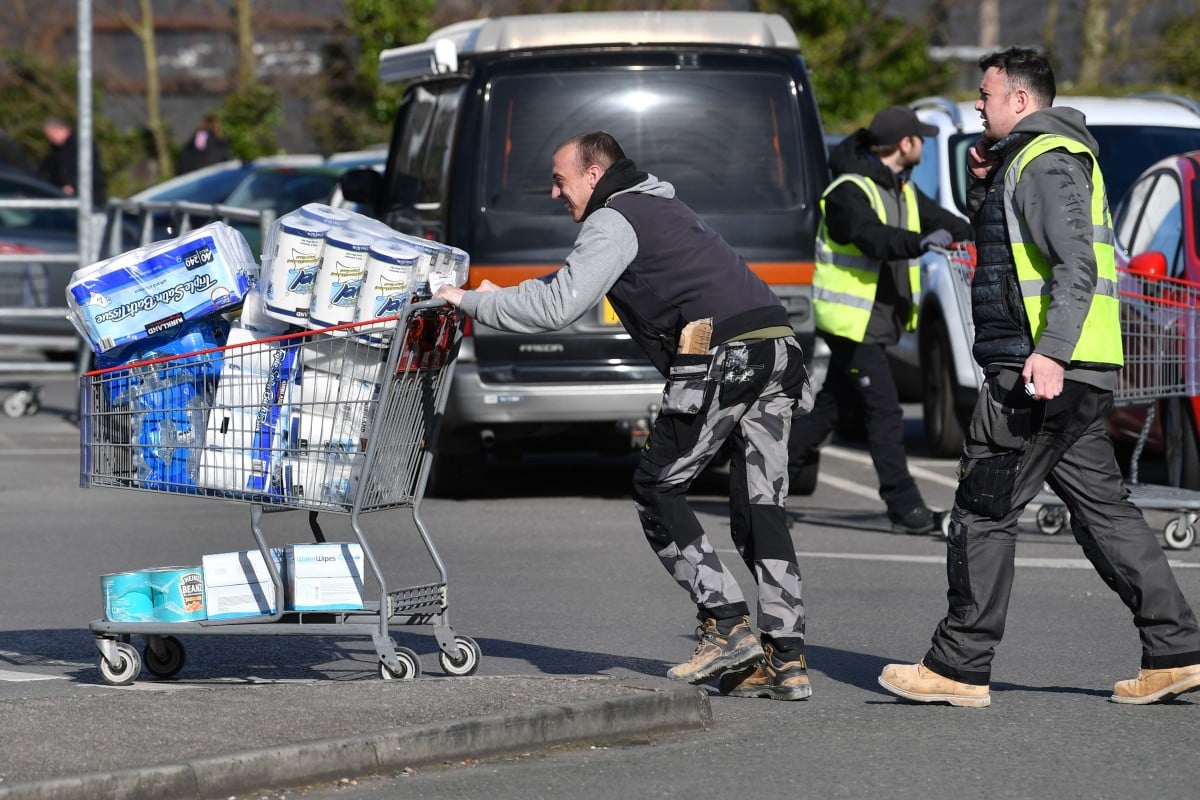
Covid-19: toilet paper and containment


Two Covid-19 issues have been weighing on my mind: toilet paper hoarding, and virus containment.

Many have been asking why people around the world have been hoarding toilet paper. A friend of mine captured the irrationality of people hoarding toilet paper by saying “It’s because they’re scared shitless!” 

There is a long history of toilet paper shortages during crises; the US had a run on toilet paper in 1973, in part created by a joke told by late night TV host Johnny Carson, but coinciding with shortages of many other consumer items, including gasoline (petrol).

I’m especially intrigued by this run on toilet paper because it seems to have started in Hong Kong, and spread to much of the rest of the world. Hong Kong even had a widely reported case of a toilet paper robbery. There seems to be something cross-cultural about the phenomenon.

Few of the articles on this phenomenon really offer a good explanation (see SCMP Agence France-Presse article). CNN.com offered a list of explanations on March 9th that included:
  1. Reason 1: People resort to extremes when they hear conflicting messages
  2. Reason 2: Some are reacting to the lack of a clear direction from officials [Hmm, this sounds like Reason 1]
  3. Reason 3: Panic buying begets panic buying [This is true; now that there is a shortage, I have no choice but to try to buy toilet paper. This is the “game theory” explanation. But it does not explain why the panic buying started in the first place.]
  4. Reason 4: It's natural to want to overprepare. [Really? Why focus on toilet paper and not tuna or beans?]
  5. Reason 5: It allows some to feel a sense of control [Control what?! An uncontrolled bowel?!]

So the psychologists say that by preparing when they feel helpless, even just by purchasing toilet paper, people get a sense of control. But none of these reasons explain why “toilet paper” and not, say breakfast cereal. After all, diarrhea is not one of the symptoms of the coronavirus.

This is actually a classic cultural, and thus anthropological, question: why do people value one thing over another. Economists can tell you where supply meets demand, but they assume demand exists. Anthropologists want to know what creates demand for a particular thing, i.e. why it has value.

Here is a better explanation. Niki Edwards, School of Public Health and Social Work, Queensland University of Technology:

Toilet paper symbolises control. We use it to “tidy up” and “clean up”. It deals with a bodily function that is somewhat taboo.

When people hear about the coronavirus, they are afraid of losing control. And toilet paper feels like a way to maintain control over hygiene and cleanliness.

So, to really get at the root of the phenomenon, we need to look at the symbolism of toilet paper. The “control” some people talk about is not controlling the disease, but the control of bodily functions that we usually rather not think about. People think of toilet paper as essential for “hygiene.” People are also told to wash their hands after they go to the bathroom. Thus, toilet paper is associated with hygiene and hand washing.

Indeed, a lot of the “hygiene” people follow to protect themselves against infection is not really effective. During SARS, there were many reports of people cleaning all the door knobs inside the house, even though they were in isolation at home. With no outsiders coming in, it is hardly necessary to wipe door knobs. The same is happening now in the US. I've heard of people washing their hands compulsively even though they are in isolation. And in one business I know of, though there are less than 10 managers left working in a large office, they have cleaning staff come through the office numerous times a day to wipe down and disinfect surfaces. I think the managers would be safer if the cleaning staff did not come, but the idea that surfaces should be “disinfected” and “cleaned” is very powerful.
  
Containment vs Mitigation

When Americans look at what China did to control the Covid-19 virus, they tend to attribute it to China’s authoritarianism. It is true that there are aspects of China’s response which were possible only because of the authoritarian state—including the denial of the problem for 3 weeks, when doctors knew the virus was serious and spreading (though we still, even today, March 28, have officials in the US downplaying the seriousness of the epidemic). But most of China’s response is not due to the authoritarian nature of the state, but to state capacity. China was able to trace contacts and impose quarantines because it had the health care personnel to do it. Proof that it is not due to authoritarianism is the fact that Korea and Taiwan were also able to react as quickly, but are very robust democracies. In Korea and Taiwan, people who came down with Covid-19 had their contacts traced and notified, and some were put in isolation to prevent them from further spreading the virus. This has helped contain the virus in China, Korea and Taiwan. (For an article on Korea, see here; on Taiwan, see here.) 

The US did not do that. Authorities delayed responding. Already in mid-February, experts were saying that the opportunity to contain the virus in the US was close to finished. (See for example Tom Bollyky of the Council on Foreign Relations, “Expert: It’s close to the point where governments decide thecoronavirus outbreak is a mitigation vs. containment situation”)

In one case, in Westport, CT, on March 5, 50 people at a party were exposed to the virus and dozens subsequently came down sick.   “Even in a well-connected, affluent town like Westport, contact tracing quickly overwhelmed health officials. ... One of the party guests later acknowledged attending an event with 420 other people, he said. The officials gave up.” This is because they lack the capacity, and perhaps the will. The parts of Asia that went through SARS were more aware that contact tracing was important. 

Contrast this with what was done in China. First, everyone who traveled to other parts of China from Wuhan was forced by local authorities to quarantine. Note that this sounds oppressive and authoritarian, but they were able to do something similar in Taiwan and Korea. Then, they closed off neighborhoods with infections, forced visitors to go through 14 days of quarantine before going to work, and placed restrictions on restaurants (but they did stay open, in contrast to ours which are all closed). I highly recommend this 12 minute video (in window below) by a Japanese businessman based in Nanjing, which was not heavily affected by Covid-19, but you can see the efforts the city went through to contain the epidemic. 


Containment may also be difficult because Americans are more mobile (though I don't know if this is true); this video by Tectonix GEO shows how the cell phones of spring break partiers (known as Covidiots) on a beach in Fort Lauderdale spread to the rest of the country in the following weeks. This video shows how people from the New York metropolitan area spread over the entire US in the two days after Gov. Cuomo announced #stayhome rules. But millions of people left Wuhan for the Chinese New Year before January 25th, and yet China’s local authorities were able to prevent them from transmitting the virus locally by requiring visitors to isolate at home. Taiwan was also able to contact tens of thousands of residents who arrived from China to contain the spread of the epidemic. But the US does not have neighborhood associations and health authorities like Asian countries have.

It is not because China is authoritarian that containment was possible; it was because they had state capacity. The same is true for Taiwan and Korea. In part, the experience of SARS in Asia meant that states there prepared better. But the US is also underprepared because Americans, and especially libertarians and Republicans, distrust state power. Trump dismantled the pandemic response team in 2018 that had been created by the Obama administration. 

A weak state is not a bug; it is a feature of America. The Trump administration has been cutting budgets of all government departments, including the CDC. The “small government” ethos is strong in America. It is linked to ideas of freedom and liberty. You can see this skepticism of the government and of public health officials, that grows from a fear of state power, in websites like this of the libertarian magazine Reason.

No one knows what will happen with this pandemic; as thisblog post says, every model and prediction we read “is just a guess but with statistics.” (But he’s not simply dismissive; he adds, “All models are wrong. Some models are useful.”). And it is useful to go back to the Feb. 13 NY Times article interviewing Donald G. McNeil Jr., their health and science reporter who has covered epidemics since 2002, to realize how little was known as late as mid February. There are still important questions about the mortality rate, like why the rate is so much lower in Germany than Italy.   

But the chance for the US to contain the virus has passed. China, Korea, Taiwan, Hong Kong and Singapore have largely succeeded but are still fighting to contain the epidemic. In the US, because of a lack of testing and the debacle over tests, and because we don’t know how reliable the tests are anyway, we have no idea what percentage of the population has been infected. But now the US has passed China and has the most confirmed cases in the world. Rah rah patriots can cheer, “We’re number one!”

As long as people worry that going out will expose them to coronavirus infection, the economy will not rebound, even if authorities do relax restrictions. President Trump and a number of business leaders want people to get back to work, but the epidemic has to recede before people will go to the theatre, to the mall, and to restaurants, not to mention travel internationally and take a cruise. The chance to contain the epidemic has passed. Mitigation will be long and messy, and it is hard to know how and when it will end.

Monday, March 16, 2020

Still no need to panic, but need to be cautious


Re-reading my previous blog post, I feel that my emphasis was wrong. While there are no incorrect facts, the takeaway message now seems wrong. I did not sufficiently emphasize that the peak of infections can easily overwhelm hospitals. Currently, a doctor friend told me St Louis University hospital has only 10 vacant beds out of 65 ICU beds. There are only1888 ICU beds in the entire state of Missouri (population about 6.1 million). The number is low because of cost-cutting, especially since 2008, because having empty beds is “wasteful.” But reducing the number of beds so they are mostly being used reduces our capacity to deal with crises. As a doctor friend put it, “Hospitals in the US are already always running at 110 percent.” The additional serious cases of COVID-19, even if they are only 1 of 100 who get sick, can still easily be too many for the hospital to cope, and doctors will have to decide who gets the ventilator and who dies.

Three articles this past week, a piece in Medium by TomasPueyo, an article on Vox, and an article in the NY Times byNicholas Kristof and Stuart Thompson, make the point that the problem is not treating the disease itself, but is going to be treating the sick at the peak of the epidemic when hospitals are overwhelmed. I highly recommend these articles. The Times article also has a table that shows that the peak of the epidemic is likely to be in July, which means Americans' current “social distancing” is going to have massive economic effects.

It seems everyone I speak to has seen the Tomas Pueyo article, and I see now that it has been viewed 35 million times in 6 days. It gives me hope that ideas can, in fact, sometimes change people's ideas and behavior!

In the US, everything changed this week. Universities started closing on Tuesday, March 10, and the NBA suspended the season the next day. That was when everyone knew it was really serious. I don’t know all the factors that have gone into closing universities, but I’m told a major issue is uncertainty over a university's liability if they stayed open and someone got sick and died. It is easier to close. This is disturbing, because it is not clear what foreign students are supposed to do, and the extra travel this causes is precisely what we don’t want if we’re trying to prevent the spread of disease. I would have thought isolating the campus from outside visitors would have been more effective, in public health terms. But, I’m not aware of all the considerations. And I’m grateful I did not have to make these difficult decisions.

One thing I did not anticipate in my earlier blog was that Americans would take no precautions at all. I did not realize how unscathed the US was from SARS. Many friends who lived through SARS in Asia have commented on how blithely Americans have been taking the epidemic. I have not been panicking, but I have certainly been washing my hands a lot and avoiding crowds. I open doors with my back (to avoid touching the door with my hands), and push elevator buttons with my knuckle--all skills learned during SARS in Hong Kong. But a combination of lack of focus, and the fiasco with the US insisting on developing its own test for the COVID-19 virus and flubbing it, has led to serious problems. As late as yesterday, March 15, we’ve been reading reports in our local paper and on social media (see for example here) of people displaying coronavirus symptoms but not being tested because they do not meet some criterion. They perhaps came from Toronto, but not Italy, so are not eligible for the test. The problem is that from a public health point of view, we need to test everyone with symptoms so we can contact others who might have been infected. And there does not seem to be much contact tracing here in the US.

Taiwan is getting some attention for its success in limiting the epidemic, though it would be getting a lot more attention if it were part of the WHO. An article in the Journal of the American Medical Associationonline notes first, how early authorities moved to test visitors and suspected cases. 

On December 31, 2019, when the World Health Organization was notified of pneumonia of unknown cause in Wuhan, China, Taiwanese officials began to board planes and assess passengers on direct flights from Wuhan for fever and pneumonia symptoms before passengers could deplane. As early as January 5, 2020, notification was expanded to include any individual who had traveled to Wuhan in the past 14 days and had a fever or symptoms of upper respiratory tract infection at the point of entry; suspected cases were screened for 26 viruses including SARS and Middle East respiratory syndrome (MERS). Passengers displaying symptoms of fever and coughing were quarantined at home and assessed whether medical attention at a hospital was necessary.

China only began to take action by classing COVID-19 as a notifiable disease on Jan. 20, and shutting down Wuhan on Jan. 23.

Taiwan’s quick and effective reaction was possible because they have highly centralized immigration records and a National Health Insurance Administration (AKA "universal healthcare"), and were able to link the two databases. Though 850,000 Taiwanese live and work in China, and many came back to Taiwan for the Lunar New Year on Jan. 25, the health authorities could identify who had traveled from China within the previous 14 days and could contact them for testing. Taiwan’s household registration system also allows authorities to locate residents; the US has no such system. In Taiwan, and Hong Kong, they have the data and the will to trace contacts; this does not seem to be the case in the US. In Hong Kong and Taiwan, they also monitor people by tracking their cell phone, something that will probably not be politically possible in the US. But I had assumed tracking contacts of people who come down with COVID-19 would be standard procedure in the US, as it was in Asia for SARS in 2003, and is currently the case in Asia. But as I mentioned, they are not even testing many of the people who show coronavirus-like symptoms, let alone tracing contacts. The first case in Missouri was a student who took the train from Chicago on March 4, and came down with symptoms on March 6th. They did disinfect the entire train.

Many people are expecting the epidemic to end with warmer weather, as happens with the flu season. Unfortunately, the fact that there are coronavirus cases in Singapore, which is on the equator, and that the Spanish Flu actually first emerged in June-July of 1918, make this unlikely. (The seasonality of the flu is actually an interesting scientific puzzle.)

Frozen food section at Trader Joe's 
 The panic in the US really hit on Thursday March 12, when there were runs on supermarkets. The panic buying of toilet paper has been widely reported, and my local supermarket had empty shelves; even paper dinner napkins were all gone. Especially surprising was the fact that all the white vinegar was gone! Back in January 2003, Hong Kong newspapers carried stories that mocked Guangzhou people for clearing stores of vinegar, because “superstitious” people were boiling vinegar to prevent what later was known as SARS. Just two months later, there was also a run on vinegar in Hong Kong, as the illness spread to the region. So it is a bit surprising that I see vinegar also gone from my local supermarket.

Paper products at local supermarket
But there are notable differences in cultural ideas of how to quarantine. In Hong Kong, people were encouraged to keep windows open at home, and go out in country parks to get fresh air. (Many people do not realize that Hong Kong is actually 70% country parks and nature reserves.) In California, starting tomorrow, people are required to stay in their homes. It seems to me that it is very safe to go outside as long as there are no crowds, but that is not the advice we are being given in St Louis. We are expected to stay indoors; in Hong Kong, fresh air was believed to be healthy.

The most notable difference in how COVID10 is dealt with is with masks. In Hong Kong, everyone is expected to wear a mask when outside. In the US and Singapore, one is only to wear a mask if ill. The argument is that a surgical mask does not help much in preventing catching the virus. (Here is a brief and insightful anthropological analysis of the different beliefs surrounding masks.) Of course, most people operate on the “better safe than sorry” principle, so would wear masks if they could. But they have been unavailable in St Louis since late January. And now we learn from the NY Times and Wired that there are people who have been buying up masks and hand sanitizers since January, to sell them on eBay and Amazon at a steep markup. This should be the topic of a future (economic anthropology) blog posting, but for now, I'll just say that it adds to the chaos and distrust.


My 90-year mother-in-law lives near Seattle in a retirement home. When asked how she was doing, with all this worry about coronavirus, she said that she has seen so many things in her life, this does not scare her that much. After all, she lived through the Japanese occupation of Hong Kong during WWII, the Cold War and "Red Scare." Yes, this is serious. But with organization and care, societies can get through this.

Tuesday, June 09, 2009

The fear of H1N1

Among the inflated fears people have of H1N1 is the fear that it might mutate. I have never understood why people fear that the new H1N1 will mutate and do not focus on our annual flu viruses of various Ns and Hs. The New York Times today has an article that confirms what I had believed, that the risk of the current virus mutating into something more lethal is very unlikely and hard to predict.

I can just hear the reply: "But there is still a chance!"